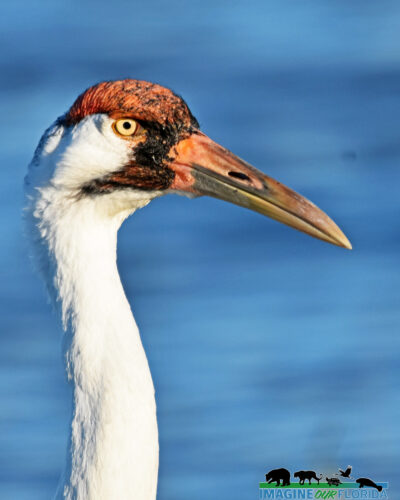
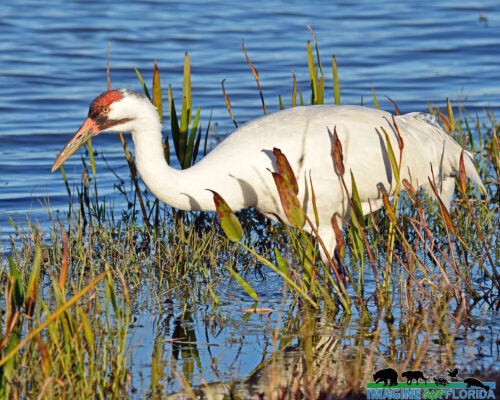
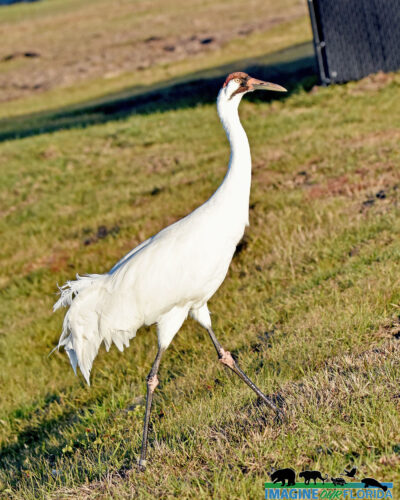
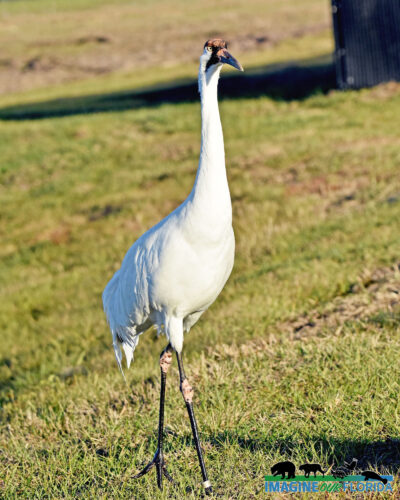
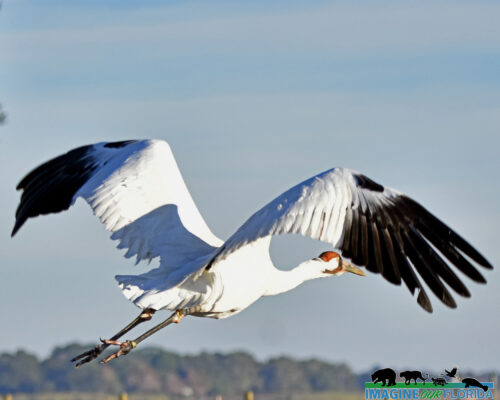
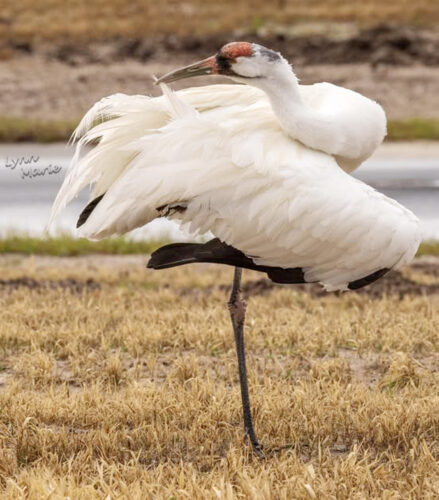
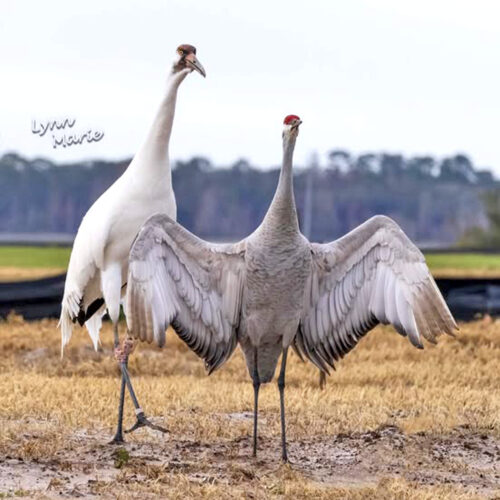
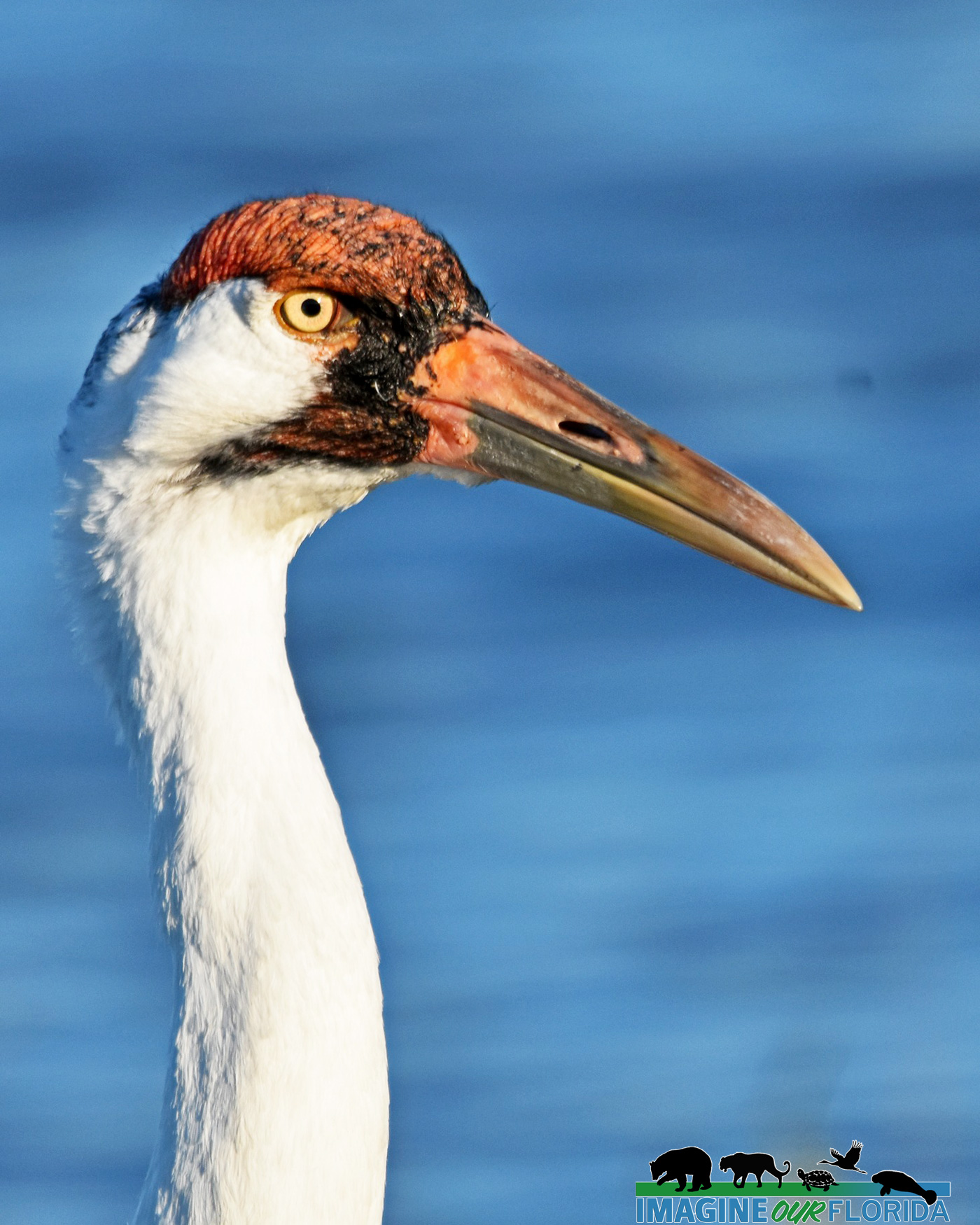
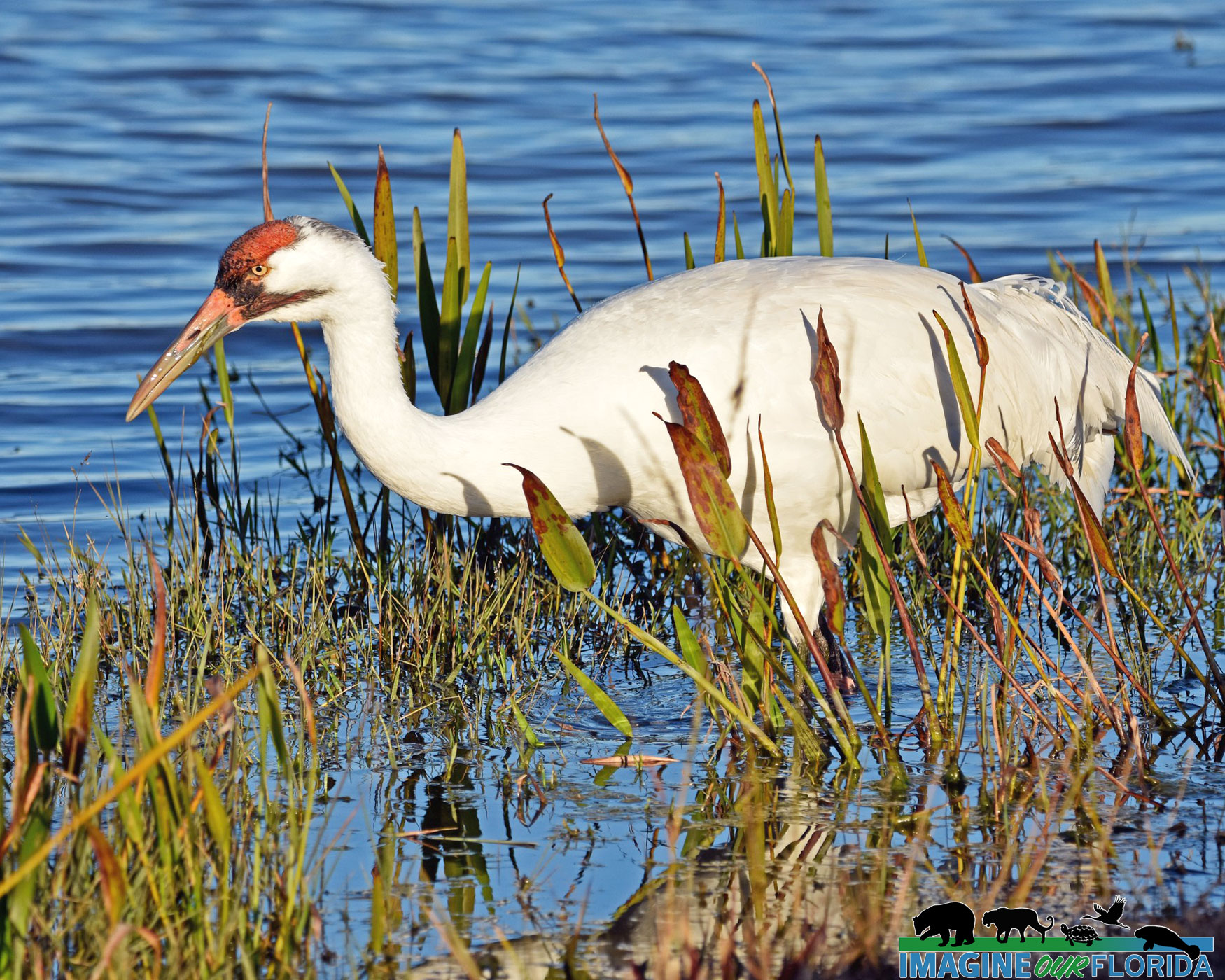
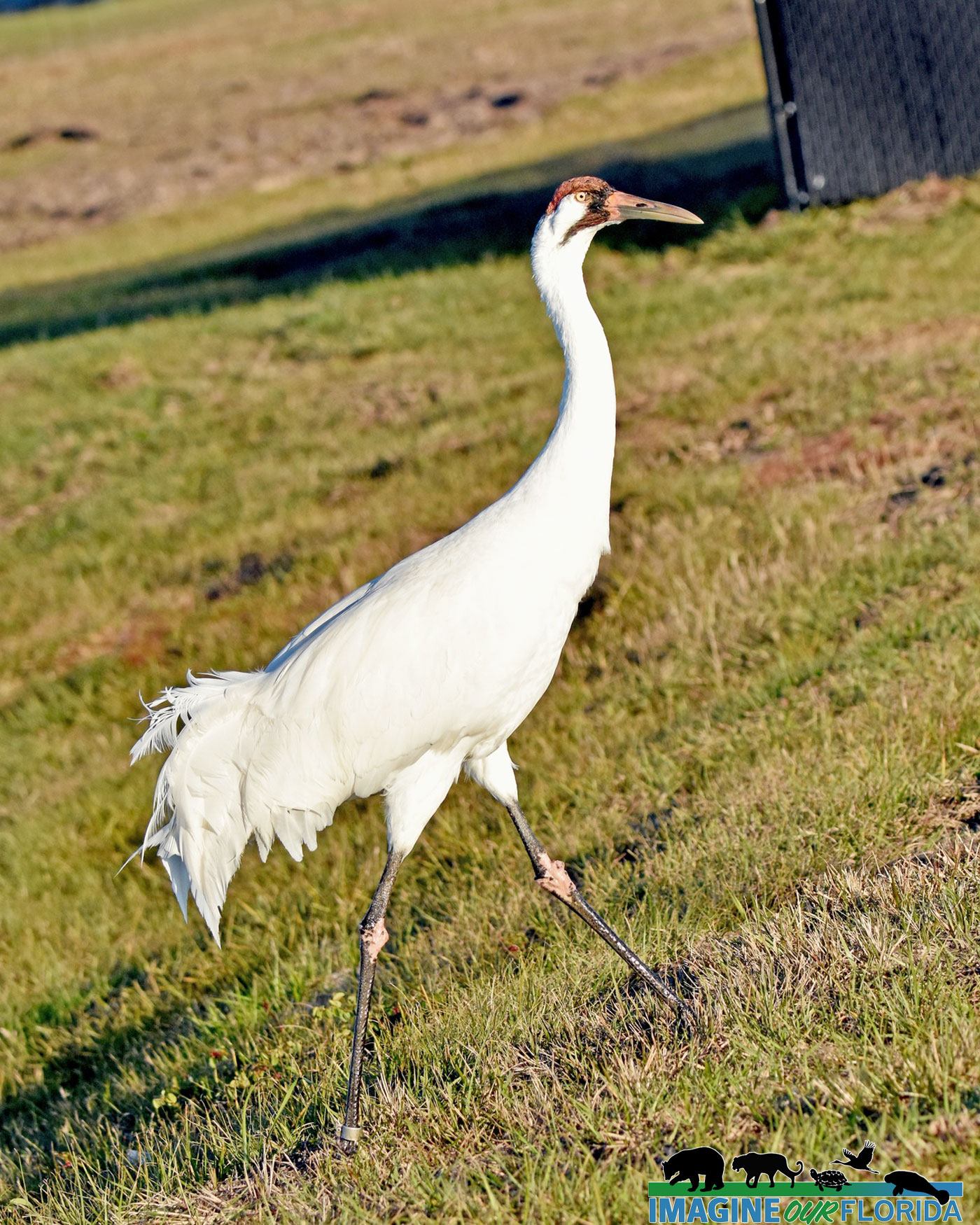
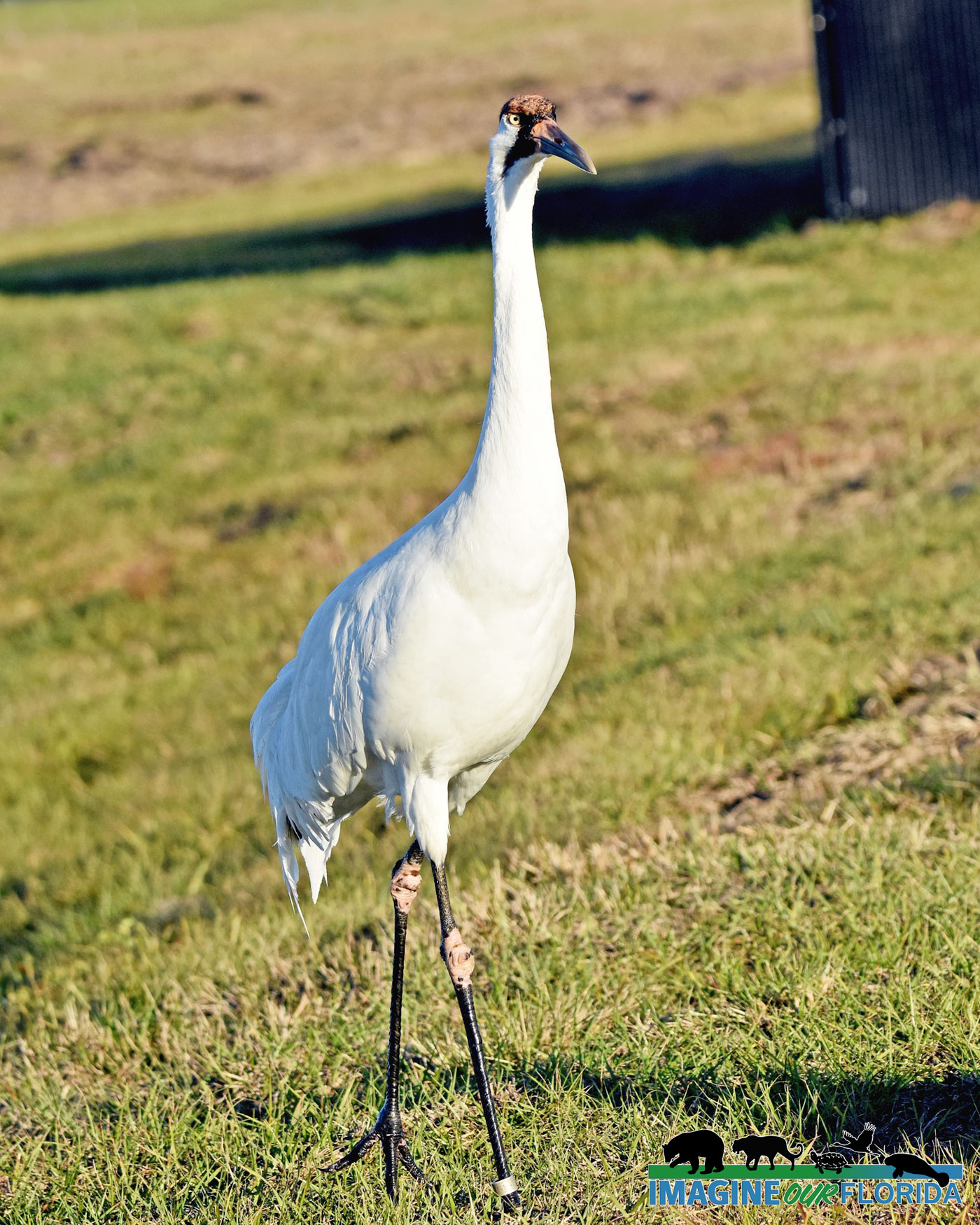
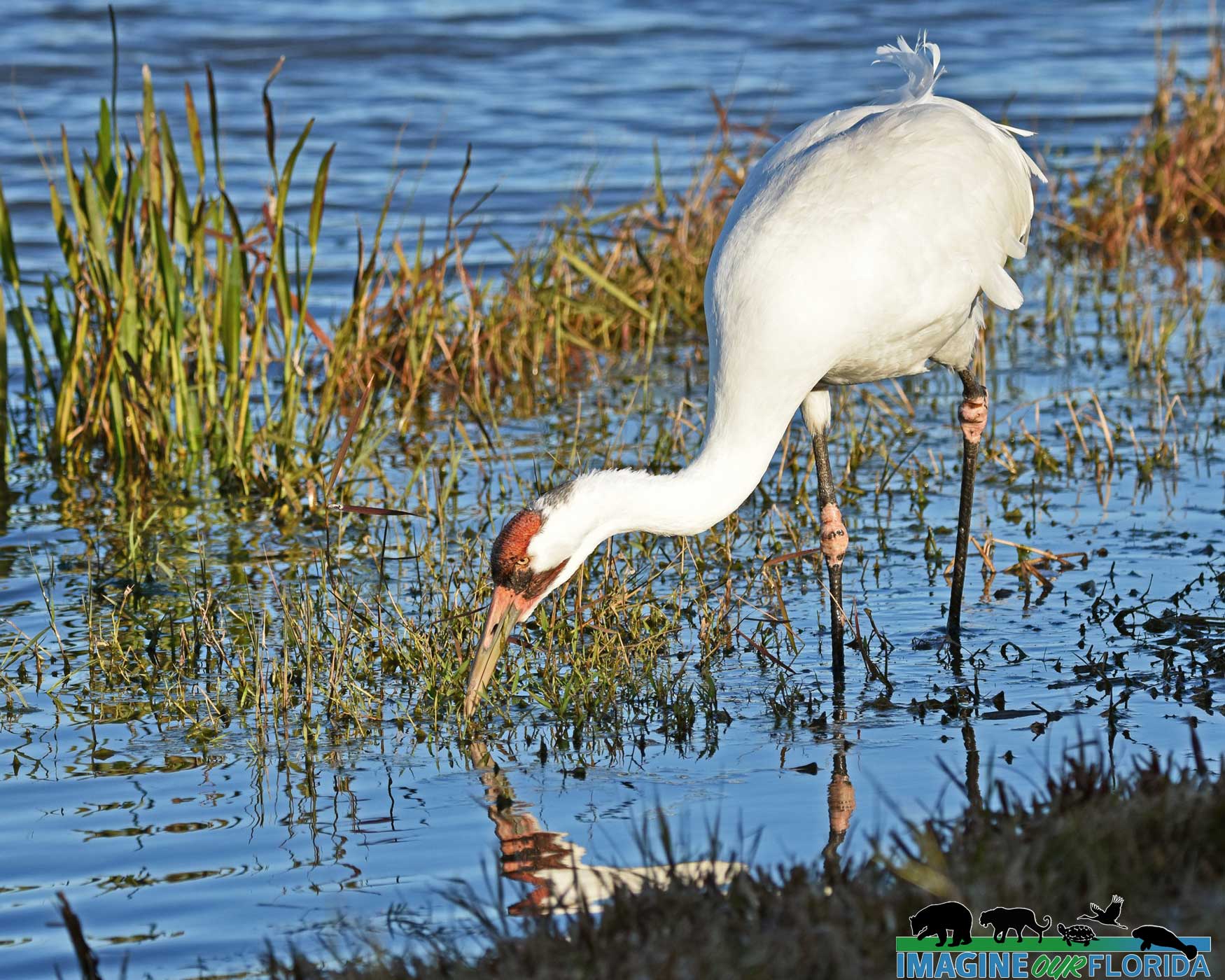
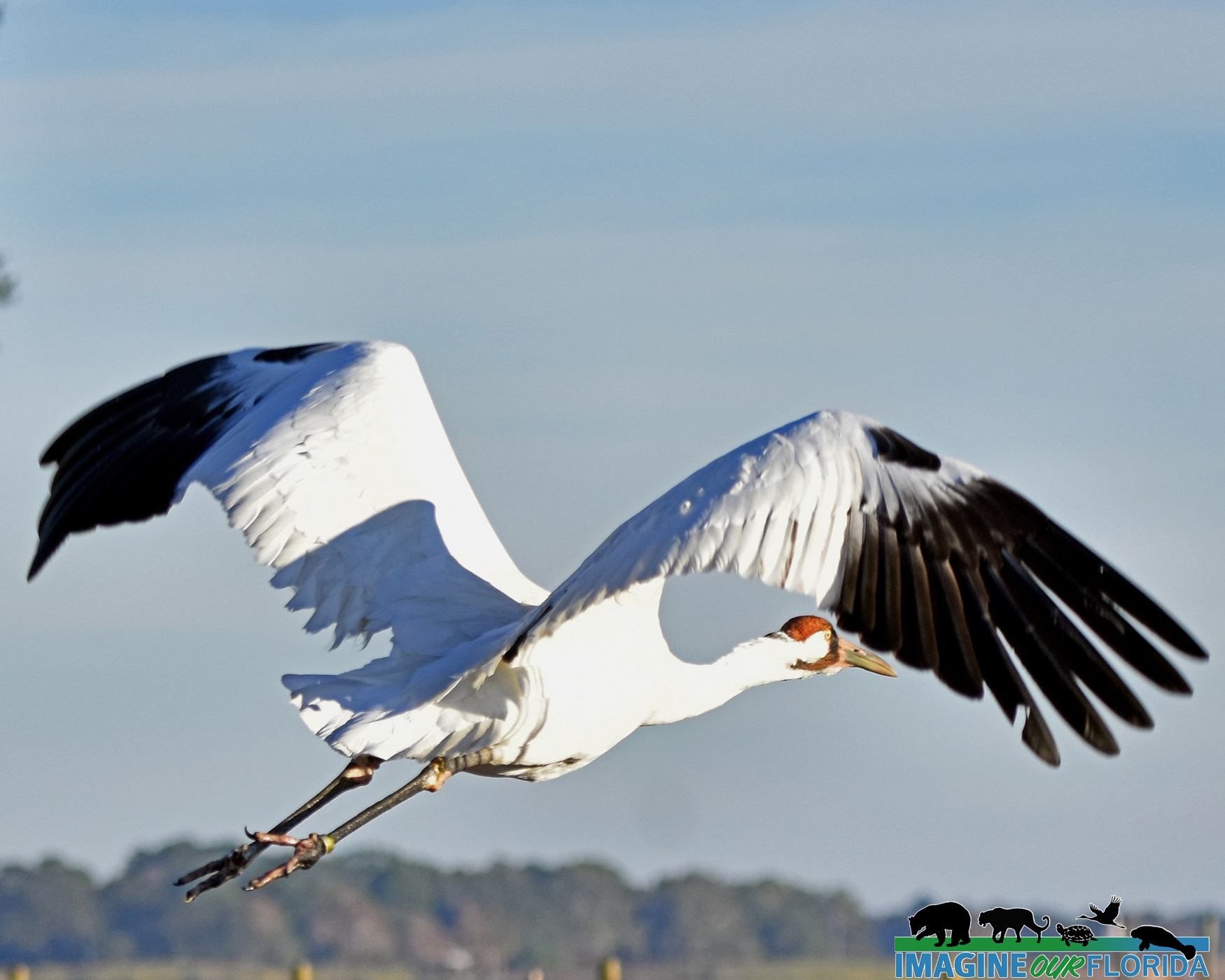
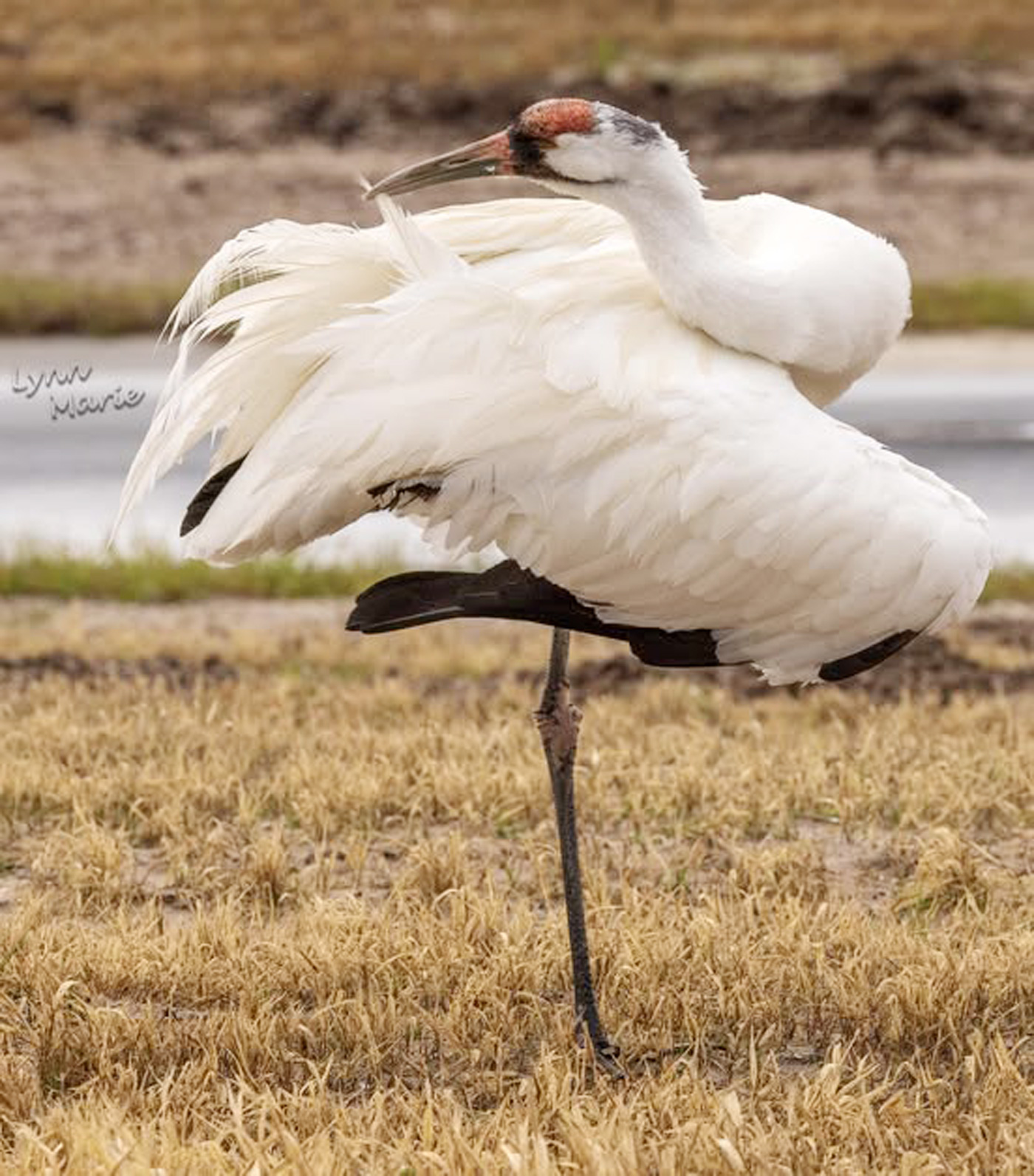
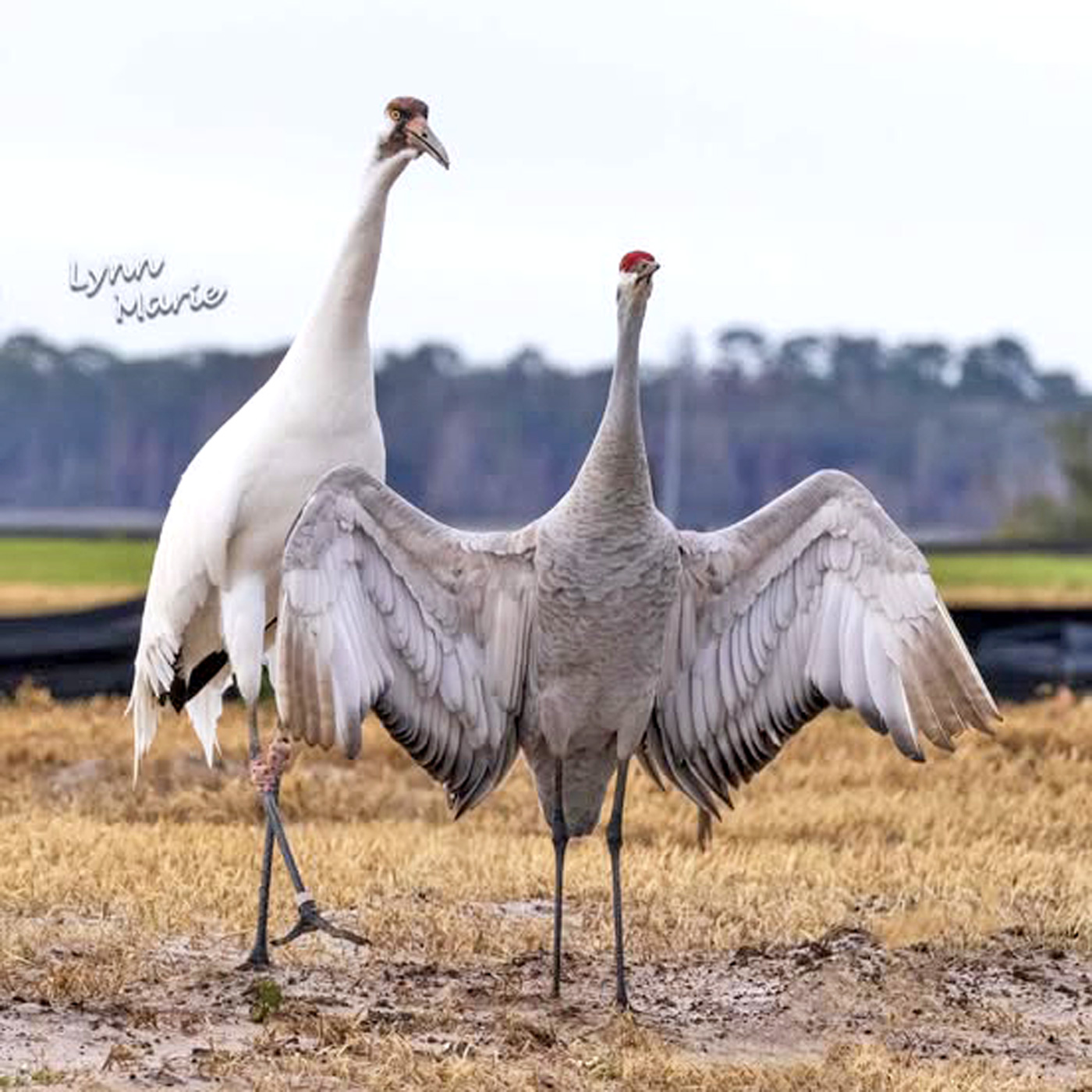
The whooping crane (Grus americana) is the tallest bird in North America, standing nearly five feet tall with a wingspan of up to eight feet. (Take a look at the size comparison with a Sandhill crane.) These federally endangered birds are known for their striking white feathers, red crown, and long black legs. As chicks, they have a cinnamon-brown color that fades to white by their first year.
Whooping cranes thrive in shallow marshes and open grasslands, feeding on aquatic invertebrates, small vertebrates, roots, acorns, and berries. They perform elaborate courtship dances, with males jumping, flapping their wings, and tossing objects. Breeding in Florida occurs between January and May, with both parents sharing incubation duties for about 30 days. It is usual for only one chick to survive from a clutch of 1-3 eggs. Young cranes fledge at 80 to 90 days and become independent within a year.
A non-migratory population was introduced in Central Florida in 1993 but was discontinued in 2008 due to survival challenges. These rare birds mate for life but will find new partners if needed. Conservation efforts continue to protect their fragile populations and ensure their survival.
Photo Credit: Andy Waldo and Lynn Marie