

Statewide Events since 2017
114
People Impacted since 2022
413,289
Social Media Followers
8569
Volunteers Hours for 2024
391
Florida Wildlife
Parks and Recreation

Florida Plants
Florida Ecosystems

Children's Activity Pages

Teacher Lesson Plans
Event Photos

Videos

Water

IOF Shop
Volunteer

About IOF

Advocacy

2024 Annual report
Social Media Feed
Imagine Our Florida, Inc.
Our purpose is to bring people together in a shared vision to preserve and protect Florida's wildlife, habitat, and ecosystems. We accomplish this via science-based education and the development of appreciation and respect for the natural world and our place within it.


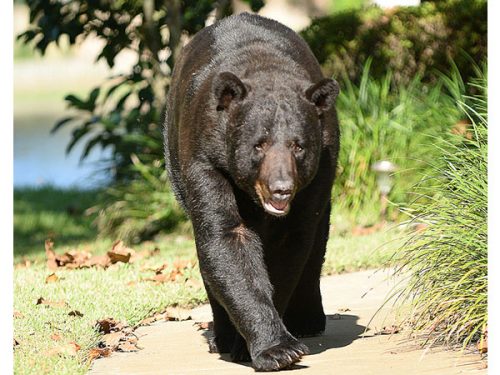
A one-eyed Florida black bear ripped open an alligator nest mound at Dinner Island Ranch Wildlife Management Area, and she and her two cubs ate at least 17 eggs in 36 minutes. The mother broke each egg with her front teeth and licked up the contents. One cub watched her do it for a few minutes, then picked up an egg and broke it on its own. The mother had taught the cub how to eat something that no peer-reviewed study had ever documented a Florida bear eating before.
Trail cameras placed at alligator nesting sites across three South Florida locations captured the raid on August 11, 2022. The mother arrived after the nesting alligator had left. She dug into the mound for roughly two minutes before uncovering the first egg. Within another minute, both cubs were beside her, feeding. She rolled eggs toward herself with her front paws, cracked them open between her teeth, and consumed the contents methodically. The cubs ate from eggs she opened. Then one figured it out. The camera caught the moment a six-month-old bear cub broke an alligator egg independently for the first time, replicating a behavior it had watched its mother perform for barely half an hour.
The female was in good physical condition despite missing her left eye. The researchers noted this specifically because a one-eyed bear navigating Florida swamp at dusk, locating a buried nest by smell, and feeding two cubs from it suggests the disability had not reduced her ability to forage or raise young. She was not starving. She was not desperate. She was an experienced mother exploiting a food source that nobody had documented bears using in Florida.
All three bears returned to the nest at 5:17 the next morning and investigated it again. They had moved the camera during the previous night's raid, so the researchers could not confirm whether additional eggs were consumed during the second visit. The camera angle had shifted.
At a separate site in Everglades National Park, a different bear told a darker version of the same story. An injured, underweight male arrived at an alligator nest and stayed for nearly five hours. He consumed at least 38 of 40 eggs. Essentially total clutch loss. One male, one night, one nest, and an entire generation of alligators erased before they hatched. The bear's poor condition suggested he needed the calories more than the Dinner Island mother did. An alligator nest is a concentrated protein source that does not run, does not fight back once the guarding female has left, and requires only a nose and two front paws to access.
Darcy Doran-Myers and colleagues at the University of Florida and the Florida Fish and Wildlife Conservation Commission published all three nest raids in the Southeastern Naturalist in 2023. The paper was the first peer-reviewed documentation of Florida black bears eating alligator eggs. Biologists had long suspected it happened. Bears are generalist omnivores. Alligator nests are conspicuous mounds of vegetation and mud built on shorelines and tree islands across every freshwater wetland the two species share. The nests contain 30 to 50 eggs packed with protein and fat. The mother alligator guards the nest but cannot be there every hour of every day for the 65-day incubation period. A bear that finds the nest while the alligator is in the water has an unguarded buffet.
Image is for illustration purposes only
Source: Doran-Myers et al. (2023), Southeastern Naturalist / National Park Service / Florida Fish and Wildlife Conservation Commission / University of Florida.
Trail cameras placed at alligator nesting sites across three South Florida locations captured the raid on August 11, 2022. The mother arrived after the nesting alligator had left. She dug into the mound for roughly two minutes before uncovering the first egg. Within another minute, both cubs were beside her, feeding. She rolled eggs toward herself with her front paws, cracked them open between her teeth, and consumed the contents methodically. The cubs ate from eggs she opened. Then one figured it out. The camera caught the moment a six-month-old bear cub broke an alligator egg independently for the first time, replicating a behavior it had watched its mother perform for barely half an hour.
The female was in good physical condition despite missing her left eye. The researchers noted this specifically because a one-eyed bear navigating Florida swamp at dusk, locating a buried nest by smell, and feeding two cubs from it suggests the disability had not reduced her ability to forage or raise young. She was not starving. She was not desperate. She was an experienced mother exploiting a food source that nobody had documented bears using in Florida.
All three bears returned to the nest at 5:17 the next morning and investigated it again. They had moved the camera during the previous night's raid, so the researchers could not confirm whether additional eggs were consumed during the second visit. The camera angle had shifted.
At a separate site in Everglades National Park, a different bear told a darker version of the same story. An injured, underweight male arrived at an alligator nest and stayed for nearly five hours. He consumed at least 38 of 40 eggs. Essentially total clutch loss. One male, one night, one nest, and an entire generation of alligators erased before they hatched. The bear's poor condition suggested he needed the calories more than the Dinner Island mother did. An alligator nest is a concentrated protein source that does not run, does not fight back once the guarding female has left, and requires only a nose and two front paws to access.
Darcy Doran-Myers and colleagues at the University of Florida and the Florida Fish and Wildlife Conservation Commission published all three nest raids in the Southeastern Naturalist in 2023. The paper was the first peer-reviewed documentation of Florida black bears eating alligator eggs. Biologists had long suspected it happened. Bears are generalist omnivores. Alligator nests are conspicuous mounds of vegetation and mud built on shorelines and tree islands across every freshwater wetland the two species share. The nests contain 30 to 50 eggs packed with protein and fat. The mother alligator guards the nest but cannot be there every hour of every day for the 65-day incubation period. A bear that finds the nest while the alligator is in the water has an unguarded buffet.
Image is for illustration purposes only
Source: Doran-Myers et al. (2023), Southeastern Naturalist / National Park Service / Florida Fish and Wildlife Conservation Commission / University of Florida.

On Monday, officers with the FWC found the toxic balls on St. Pete Beach. Tampa Bay 28 reporter Casey Albritton caught up with Sandy Denton as she spent Tuesday afternoon walking along St. Pete Beach, looking for the small white mothballs.
